

Liver 101
The liver is your body’s largest internal organ and its most hardworking chemical plant. While it is often associated primarily with processing alcohol, its actual scope of work is vast, essential, and, in many ways, remarkable.
Anatomy: Where It Lives
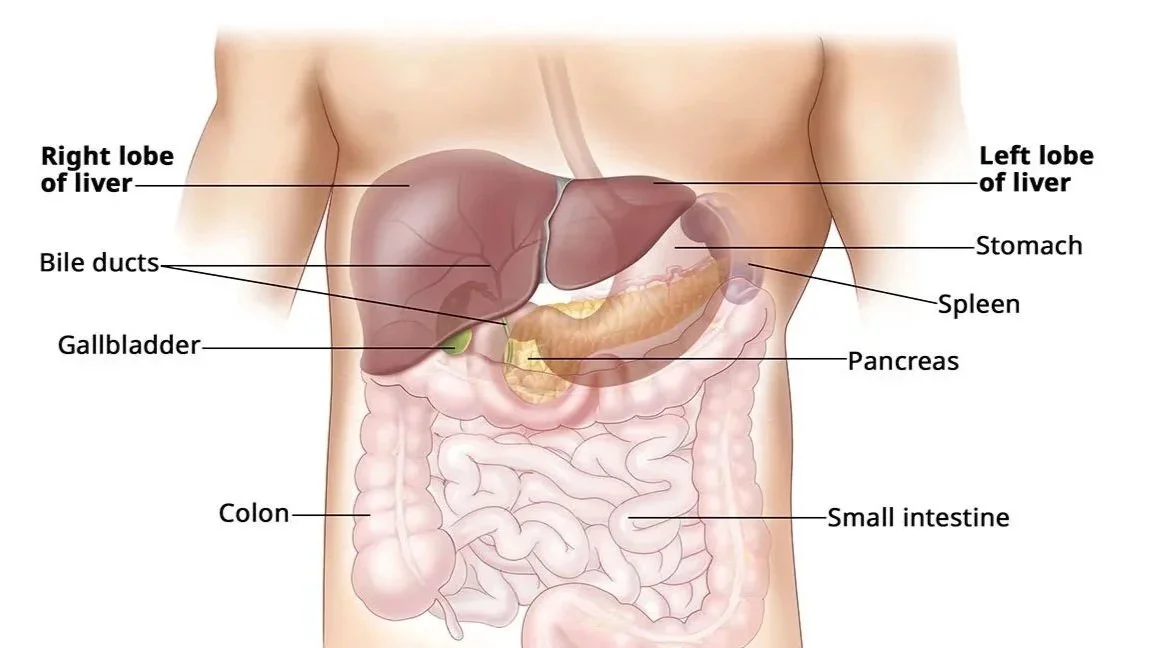
Your liver is a dark reddish-brown, wedge-shaped organ located in the upper right quadrant of your abdomen, protected by your ribs and sitting just below the diaphragm.
Size & Weight: It’s about the size of a football and weighs roughly 1.4 kg (3 lbs) in an adult.
Dual Blood Supply: Unlike most organs, it has two blood sources: the Hepatic Artery (bringing oxygen-rich blood) and the Portal Vein (bringing nutrient-rich but also toxin-laden blood directly from your digestive tract).
The 500+ Functions: A Daily Miracle
Science has identified over 500 vital functions performed by the liver. To make this manageable, we group them into four "Core Departments":
The Filter
Cleans your blood of toxins, old blood cells, and drug byproducts. It converts toxic ammonia (a byproduct of protein digestion) into urea for excretion.
The Factory
Produces Bile (crucial for fat digestion), Albumin (a protein that prevents blood vessels from leaking), and Clotting Factors that help you stop bleeding after an injury.
The Warehouse
Acts as your battery, storing excess sugar as Glycogen. It also houses essential reserves of Vitamins A, D, E, K, and B12, along with Iron and Copper.
The Metabolic Hub
Regulates blood sugar levels and processes fats into energy or cholesterol.
The Regeneration Power
One of the most extraordinary features of the liver is its ability to regenerate. It is the only organ in the human body capable of significant regeneration.
The 25% Rule
Even if 75% of the liver is surgically removed or damaged, the remaining 25% can grow back to its full size and function in as little as 30 days in a healthy individual.
The Limit
This "miracle" only happens if the liver is not severely scarred (Cirrhosis). Once healthy tissue is replaced by permanent scar tissue, regeneration becomes significantly more difficult.
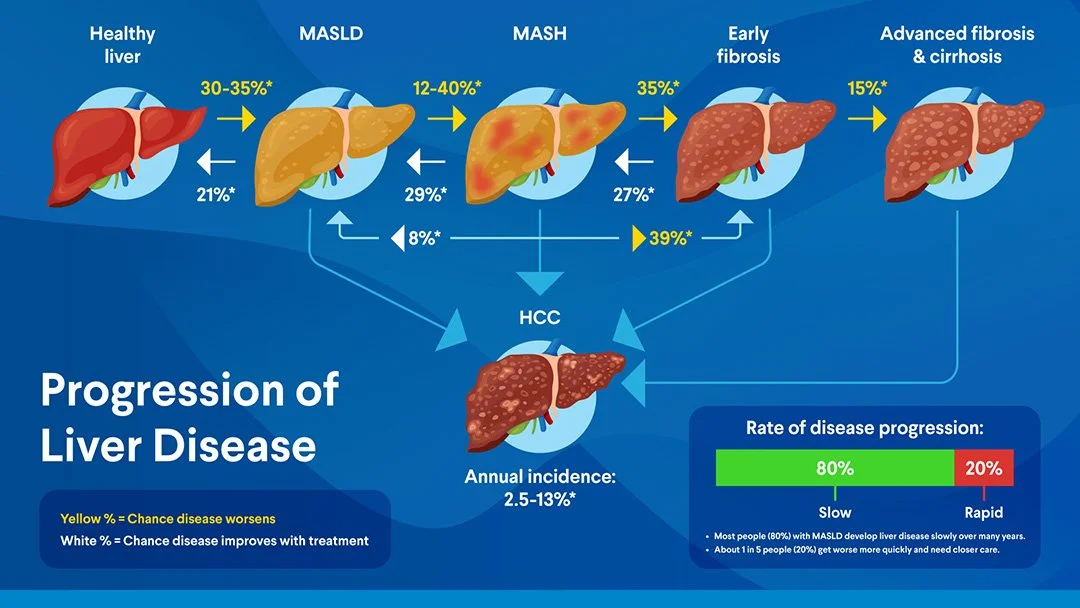
As of 2026, the medical community has officially transitioned to new terminology to better describe liver health. What was once called "Non-Alcoholic Fatty Liver Disease" (NAFLD) is now known as MASLD (Metabolic Dysfunction-Associated Steatotic Liver Disease).
Modern Challenges: From NAFLD to MASLD
A Growing Crisis
A 2026 study published in The Lancet reports that over 1.3 billion people worldwide are currently living with MASLD.
The "Silent" Issue
It is often called a silent disease because most people experience no symptoms until the liver is significantly damaged. Early education—like what you are reading now—is the best defense.
References & Further Reading
American Liver Foundation (2026). "Liver Functions and Health Basics."
StatPearls / NCBI (2025). "Physiology, Liver."
The Lancet Gastroenterology & Hepatology (April 2026). "Global Burden of MASLD: 2023-2050 Projections."
Columbia Surgery. "The Liver and Its Functions."